Olivia Friedrich · 2 September 2026
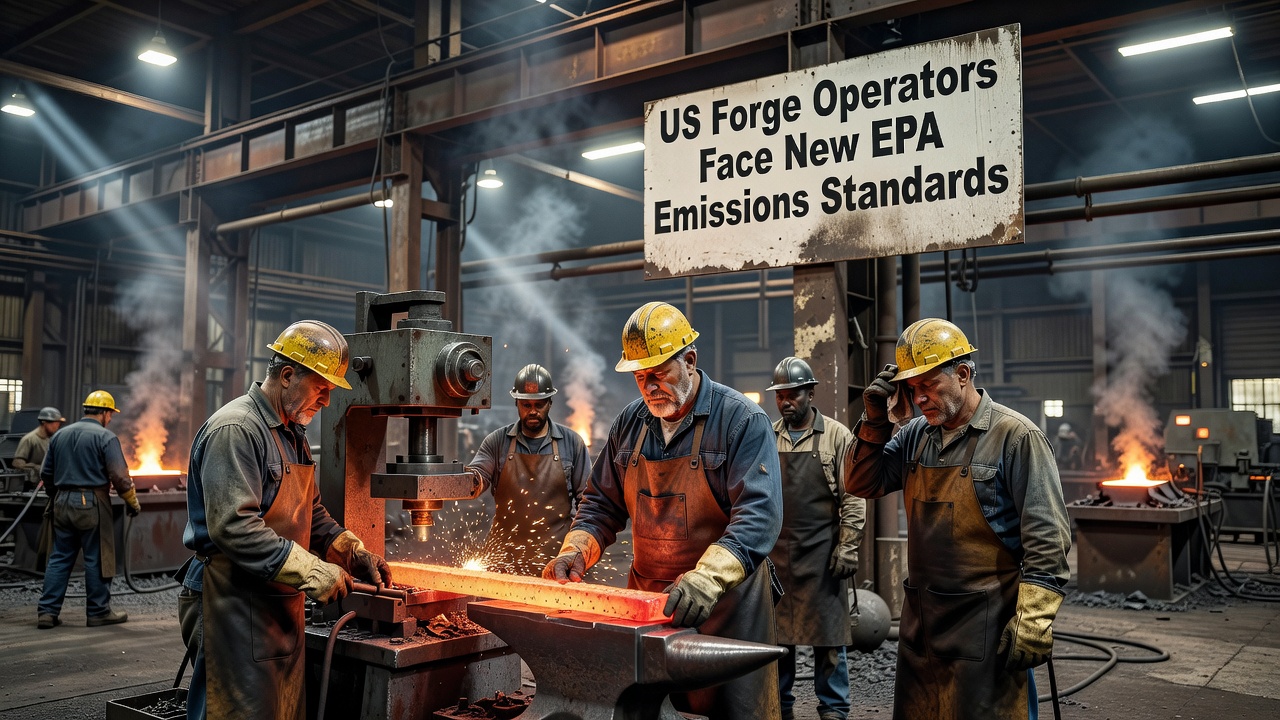
The US Environmental Protection Agency recently announced new emissions standards that will significantly affect forge operators throughout the United States. These standards focus on limiting the release of harmful pollutants from forging processes, which are essential for producing components used in automotive, aerospace, and construction sectors. The goal is to improve air quality and combat climate change by targeting specific industries with high energy consumption and traditional coal or gas fired heating methods.
Key Provisions of the New Standards
The rules require forge operators to install advanced filtration systems and monitor emissions continuously using certified equipment. Compliance deadlines are set for 2026, with phased implementation based on facility size. Smaller operations may receive extended timelines but must still meet baseline requirements. Forging involves heating metals to extreme temperatures, which traditionally releases significant amounts of carbon dioxide, particulate matter, and other pollutants. Industry experts estimate that the new standards could increase operational costs by 15 to 25 percent initially as companies upgrade furnaces and install scrubbers. Many US forge operators are already investing in electric arc furnaces and alternative fuels to meet the criteria ahead of schedule. The EPA has also outlined incentives for early adopters, including tax credits under the Inflation Reduction Act to offset some capital expenses.
Challenges and Industry Response
Operators face challenges in retrofitting older equipment while maintaining production levels and meeting customer delivery schedules. The American Forging Association has called for additional federal support to ease the transition and prevent plant closures in rural areas. Some facilities are exploring carbon capture technologies as a long-term solution to further reduce their environmental footprint. Environmental groups welcome the changes, noting that forging contributes notably to industrial emissions nationwide. However, business leaders warn of potential job losses if costs become prohibitive for smaller family owned shops. The standards align with broader national goals to cut emissions by 50 percent by 2030. Training programs for workers on new monitoring equipment are being rolled out in key states like Ohio and Pennsylvania, where many forging plants are located. The EPA plans to conduct audits starting next year to ensure adherence. Overall, the industry is adapting by sharing best practices through trade associations and seeking innovative ways to reduce environmental impact without sacrificing efficiency or competitiveness in global markets.